
Find California Arrest Records
California arrest records are kept by county sheriff offices and local police departments across the state. The California Department of Justice also stores criminal history data in a central database. You can search for arrest records online through jail rosters, booking logs, and court case portals. Many California counties post daily booking reports on their sheriff websites. Some records are free to view while others need a formal request. This guide shows you where to find arrest records in California and how the search process works.
California Arrest Records Quick Facts
California DOJ Arrest Records
The California Department of Justice runs the state's main criminal record system. They keep RAP sheets for people who have been arrested in California. RAP stands for Record of Arrest and Prosecution. These records are based on fingerprints, so they are linked to a specific person through biometric data.
You can get a copy of your own criminal record from the DOJ. This is called a Record Review. The process works like this: you submit your fingerprints at a Live Scan site, pay the $25 fee, and wait for the DOJ to mail you the results. The DOJ cannot give your record to someone else without legal cause. Third party requests get denied unless there is a court order or other valid legal reason. The California DOJ Record Review page has all the forms and steps you need to start this request.
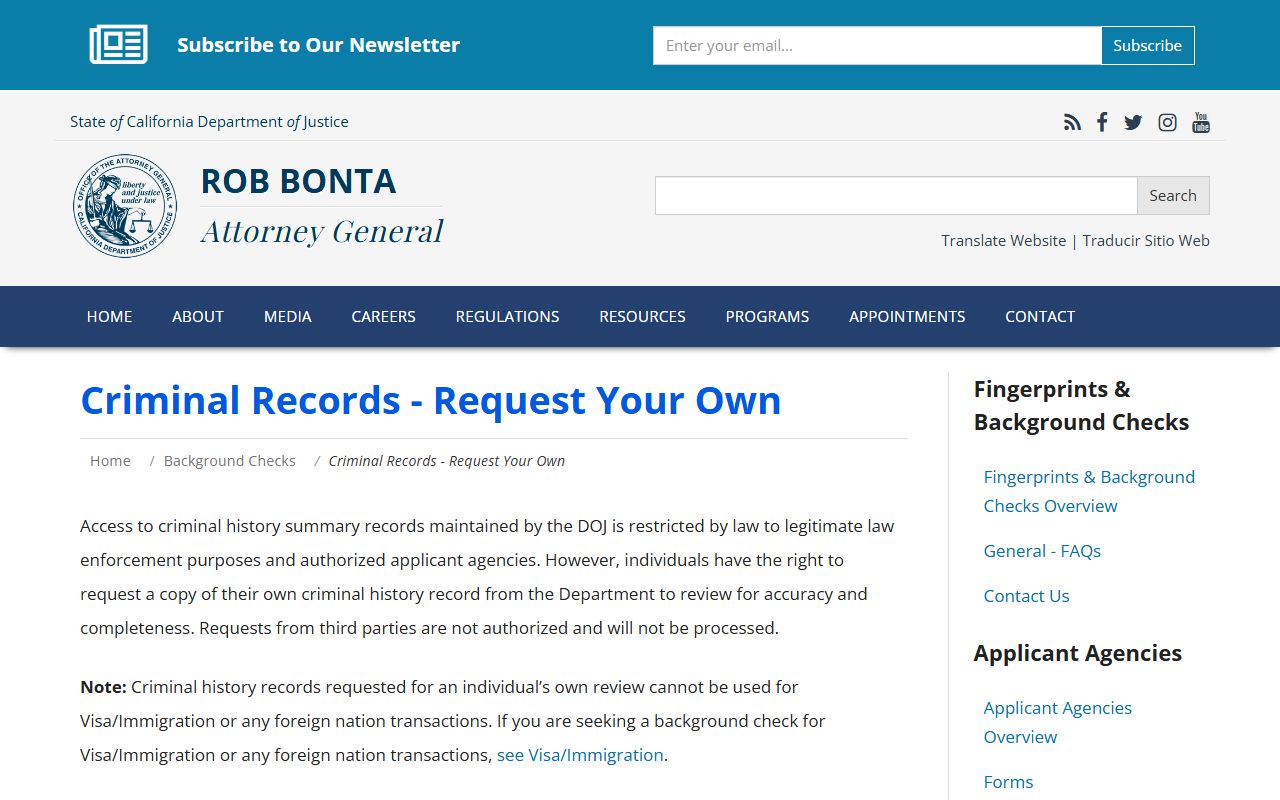
The Record Review process is only for your own records. You cannot use it to check on someone else. If you need to see if someone has a criminal past, you must use other methods like court record searches or public jail rosters in California.
Live Scan Fingerprinting in California
Live Scan is the electronic way to submit fingerprints in California. Most police stations and sheriff offices offer this service. Private businesses also run Live Scan sites across the state. You will need Live Scan for a DOJ Record Review, employment background checks, and many state licenses.
The DOJ keeps a database of all Live Scan locations in California. You can search by city or zip code to find one near you. Each site sets its own rolling fee for the fingerprinting service. These fees range from $20 to $65 on top of the state processing fees. The DOJ Live Scan Locations page lets you search for sites in your area and see their hours and fees.
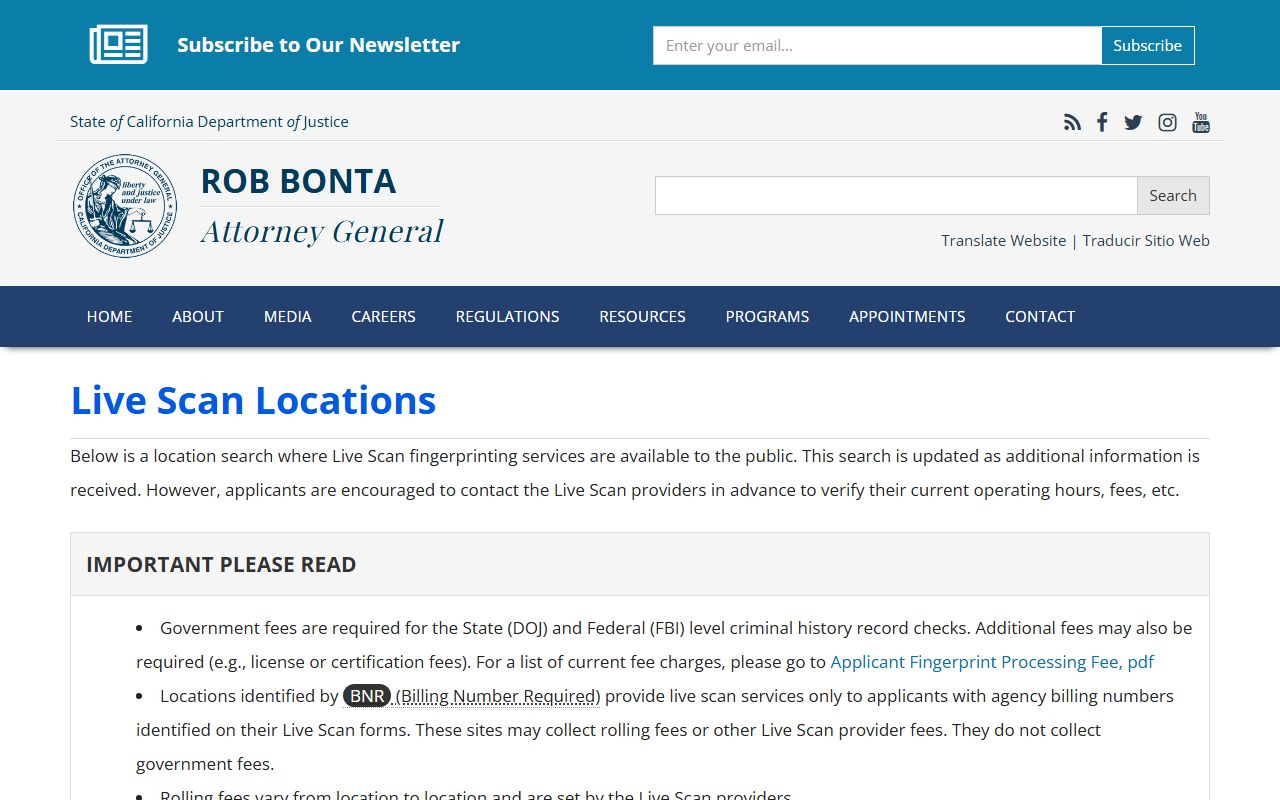
When you go to a Live Scan site, bring a valid photo ID. Expired IDs will not be accepted. The operator will scan your fingerprints and send them to the DOJ. For most clean records, results come back in 48 to 72 hours. Records that need manual review take longer.
Note: You must use the correct Live Scan form for your request type, such as BCIA 8016RR for Record Review.
California Background Check System
The DOJ runs background checks for jobs and licenses in California. Over 45,000 agencies can request these checks. The DOJ processes about 2 million state level checks and 1.2 million federal level checks each year. This is one of the biggest state systems in the country.
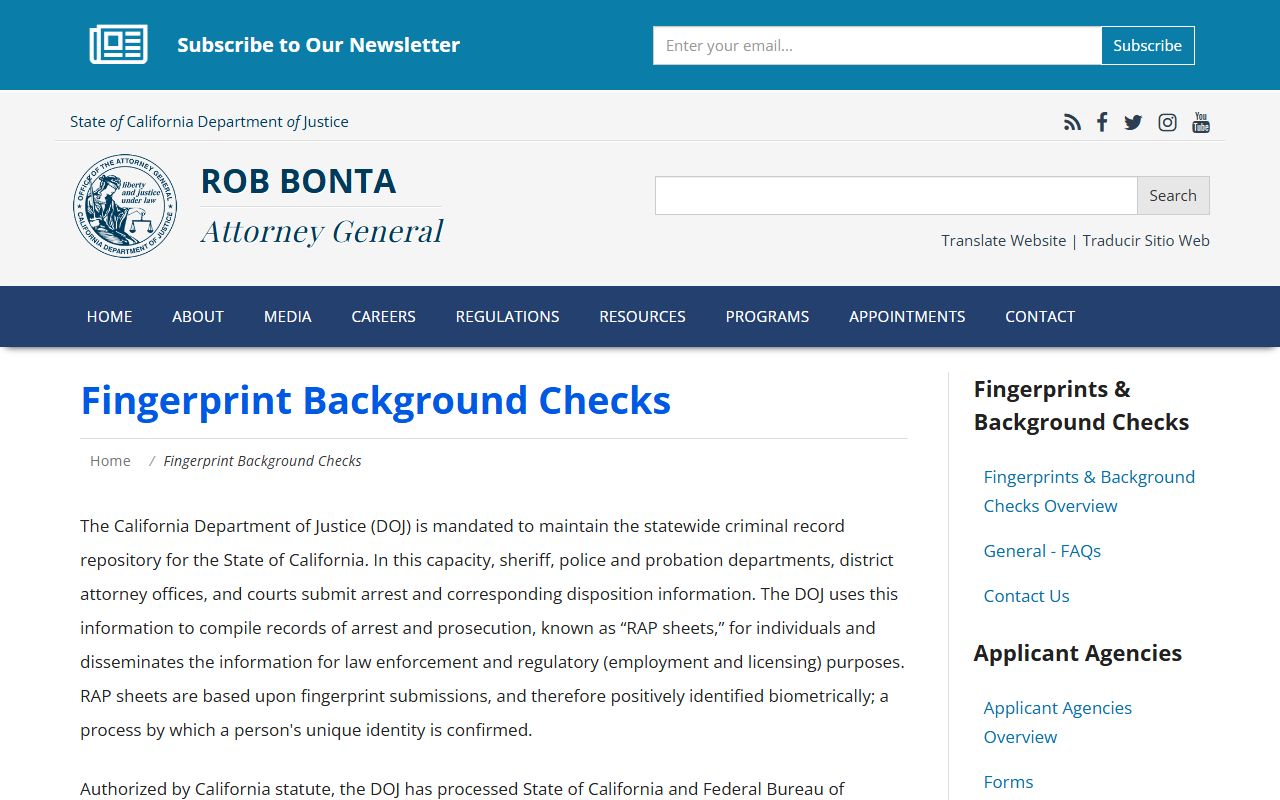
Background checks use the same fingerprint data as arrest records. When you apply for a job that requires a check, you submit fingerprints at a Live Scan site. The employer pays the state and federal fees. The DOJ Background Checks page explains how the whole system works for both employers and applicants.
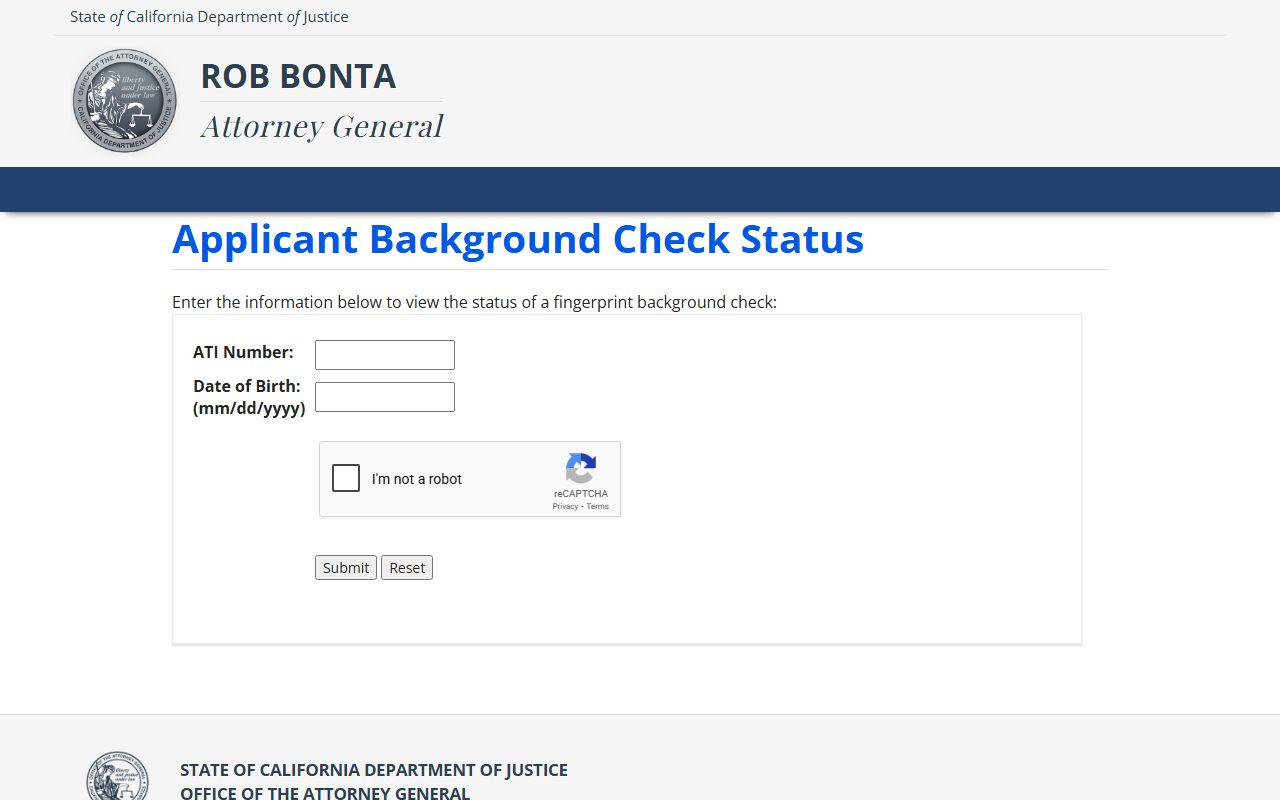
If you applied for a job and want to know where your background check stands, use the Applicant Background Check Status portal. You will need your ATI number and date of birth to search. The portal shows if the check is still in progress or done.
The fees for background checks depend on the type of request. Employment checks cost $32 for state and $17 for federal. License and permit checks are the same. Record Review costs $25 and has no federal component. The rolling fee at the Live Scan site is extra.
County Jail Rosters and Booking Logs
Each California county sheriff runs one or more jails. These jails post booking information online. You can search by name to see if someone is in custody. The booking logs show recent arrests, usually from the past 72 hours to 30 days. This is often the fastest way to find out if someone was arrested in California.
Large counties like Los Angeles, San Diego, and Orange have robust online search tools. The Los Angeles Sheriff Inmate Information Center lets you search by name or booking number. Booking data may take 2 to 6 hours to show up after an arrest. For questions about inmates in LA County custody, call (213) 473-6100. The San Diego Who's In Jail tool provides similar search features. Note that the San Diego site goes down for maintenance every Wednesday at noon.
Smaller counties often use CitizenRIMS or similar platforms for their jail rosters. Some rural counties still post PDF booking logs instead of searchable databases. The specific tools vary by county, but almost all 58 California counties have some form of online jail roster you can access without charge.
Note: Jail rosters show current or recent inmates only and do not include historical arrest records.
California Arrest Record Laws
California law controls who can see arrest records and how they can be used. Penal Code 11105 sets the rules for state summary criminal history information. This law defines what goes into a RAP sheet and who can access it. Arrest dates, charges, booking numbers, and case outcomes all appear on these records.
Penal Code 13300 covers local summary criminal history information. This is what local police and sheriff departments keep at the county level. The rules are similar to state records but apply to records held by local agencies in California.
Under Penal Code 851.8, you can ask to have your arrest record sealed if you were factually innocent. This process involves filing a petition with the court. If the judge grants it, the police must seal and destroy all records of that arrest. This law helps people clear their name when charges were dropped or they were found not guilty.
Penal Code 851.91 lets people seal arrest records even without proving innocence. If your arrest did not lead to a conviction, you may qualify. You file a petition with the court in the county where the arrest happened. The judge reviews it and decides if sealing is appropriate.
Expungement and Record Relief in California
Penal Code 1203.4 allows for expungement after you finish probation. The court can dismiss the charges on your record. This is not the same as sealing. The arrest still shows on your RAP sheet, but it notes the dismissal. Keep in mind that even with a dismissal, you still cannot own or possess a firearm if your conviction took that right away.
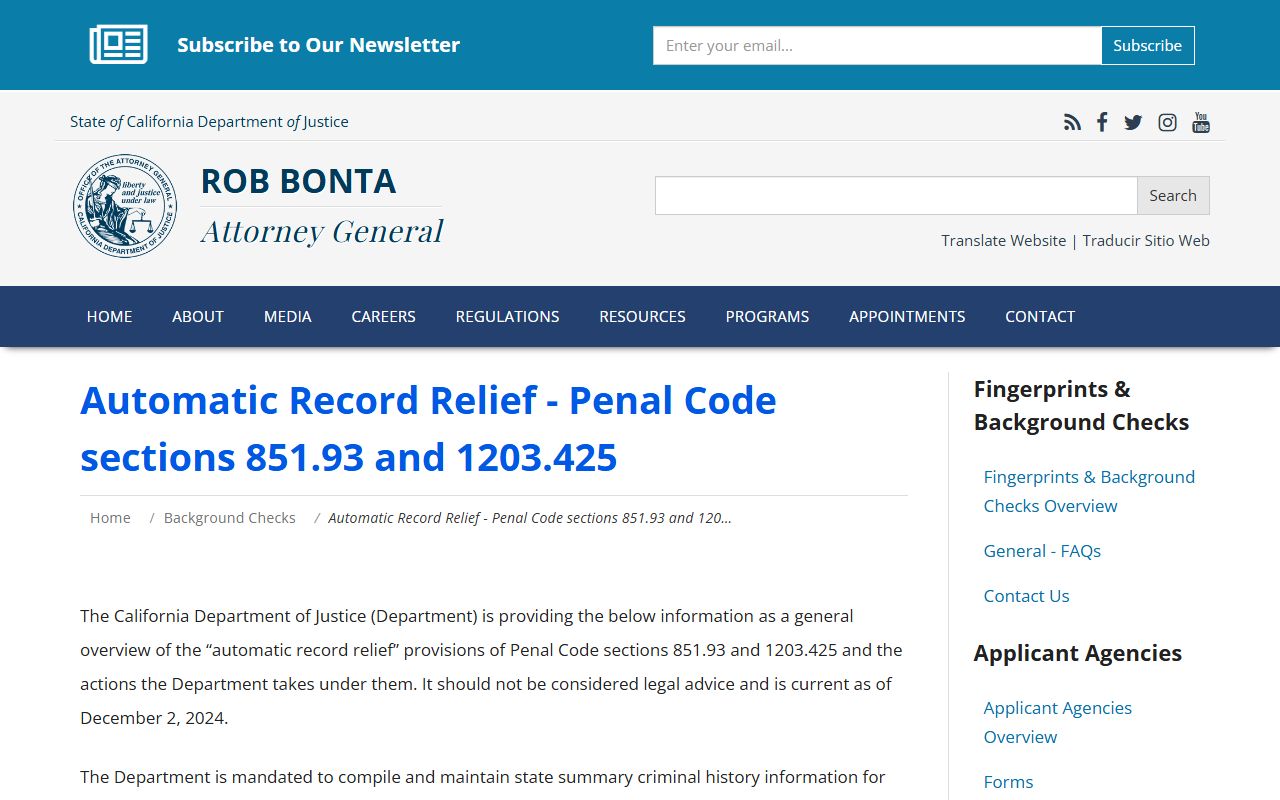
California now has automatic record relief under Penal Codes 851.93 and 1203.425. The DOJ reviews arrest and conviction records every month. If you qualify, they add a note to your record showing relief was granted. This is automatic. You do not need to file a petition or pay a fee.
The DOJ Automatic Record Relief page explains who qualifies. The relief applies to arrests that did not result in conviction and to certain old convictions. It does not delete the record. The arrest or conviction stays on your RAP sheet with a note that relief was granted.
Note: Automatic record relief is not the same as expungement or sealing and does not remove entries from your criminal history.
Fair Chance Act and Employment
The Fair Chance Act changed how California employers can use arrest records. This law is also called Ban the Box. It blocks employers with five or more workers from asking about criminal history on job applications. They must wait until after a conditional job offer to run a background check.
If an employer wants to deny you a job based on your criminal past, they must follow a specific process. They have to give you a copy of the background check results. You get time to respond before a final decision is made. The California Civil Rights Department Fair Chance Act page has details on these rules and how to file a complaint if an employer breaks them.
If you think your rights were violated under this law, you can contact the California Civil Rights Department. Call 800-884-1684 or email contact.center@calcivilrights.ca.gov. They can investigate complaints and take action against employers who do not follow the rules.
California Sex Offender Registry
Megan's Law lets the public see information about registered sex offenders in California. The DOJ runs the registry at meganslaw.ca.gov. You can search by name, address, or area to find offenders near you. The site shows photos, addresses, and offense details for many registrants.
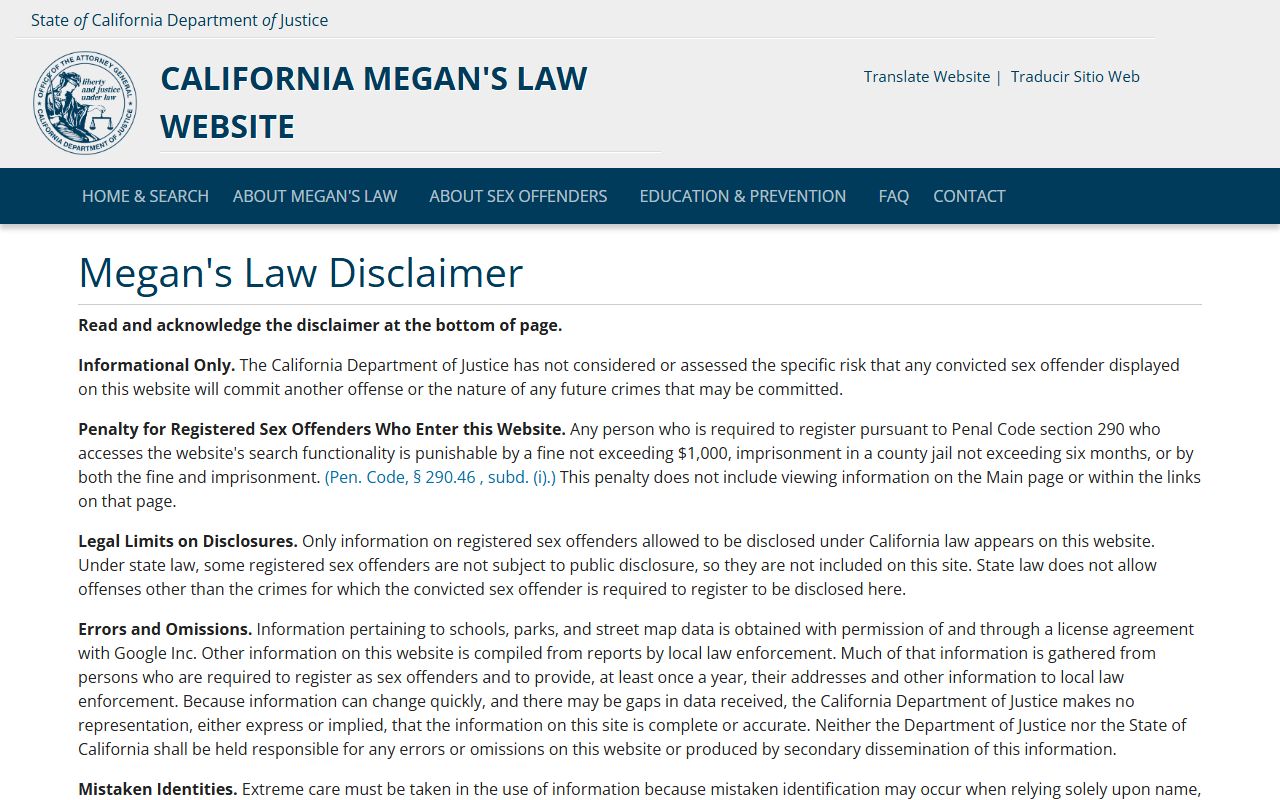
California uses a three-tier system for sex offender registration. Tier 1 offenders must register for 10 years. Tier 2 is 20 years. Tier 3 means lifetime registration. The tier depends on the offense and other factors. Not all registrants appear on the public website. Only those whose offenses meet certain criteria are shown to the general public.
Registered sex offenders cannot use the Megan's Law search feature themselves. Doing so can result in a fine up to $1,000 and up to six months in jail. The registry is meant to help the public protect their families, not for offenders to track other offenders.
California DOJ Contact Information
The DOJ has different contact points for different services. For questions about your own criminal record, email recordreview@doj.ca.gov or call (916) 227-3849. This is the Record Review Unit. They handle requests from people who want to see their own RAP sheets.
For background check status and applicant questions, email applicantinfoservices@doj.ca.gov. If you are an employer or agency with questions about a background check you requested, email appagencyquestions@doj.ca.gov instead. The DOJ Contact page lists all the specific emails for different issues.
The mailing address for the DOJ Record Review Section is:
- California Department of Justice
- Bureau of Criminal Identification and Analysis
- Record Review and Challenge Section
- PO BOX 160207
- Sacramento, CA 95816-0207
For Live Scan technical issues, email livescansupport@doj.ca.gov. Billing questions go to DOJ.AppBill@doj.ca.gov or call (916) 227-3870. Each unit handles its own area, so using the right contact gets you answers faster.
Victim Notification Services
California VINE lets crime victims track offenders in custody. VINE stands for Victim Information and Notification Everyday. You can register to get alerts when an offender is released, transferred, or escapes. The service is free and available in over 200 languages through a translation line.
Visit VINE California to search for an offender and sign up for alerts. You can also call 1-877-411-5588 to register by phone. The system covers county jails and state prisons across California.
The California Department of Corrections and Rehabilitation also has an Inmate Locator for state prison inmates. This lets you search for people serving time in CDCR facilities. It shows their location, projected release date, and other case details.
Browse California Arrest Records by County
California has 58 counties, each with its own sheriff's department and jail system. Click a county below to find local inmate search tools, booking logs, and records request information for that area.
Arrest Records in Major California Cities
Many California cities have their own police departments with separate arrest records. Select a city below to learn about local police record requests and resources.